RETRO GAMER JUNCTION
  • Home
  • Retro Corner
    • Retro's Blog >
      • Could Square Enix be Making a Come Back?
      • Top Best/Worst >
        • Retro's Top Five Best Five Nights at Freddy's Knockoffs
        • Retro's Top Five Worst Five Nights At Freddy's Knockoffs
        • Retro's Top Ten Classic Games to Play During Halloween
      • Is Johnny Turbo the Worst Superhero Ever?
      • Nintendo 64: My Most Loathsome Console Experience
      • Sega Genesis: The Ultimate Arcade Console
      • TurboGrafx 16: A Lost and Forgotten Console
    • Retro Arena >
      • Disney's Aladdin: Super NES vs Genesis
      • Doom (PS1) vs Doom 64
      • Doom: Super NES vs Genesis 32X
      • Final Fight (Super NES) vs Streets of Rage
      • Jurassic Park: Super NES vs Sega Genesis
      • Killer Instinct vs Mortal Kombat II
      • Lufia vs Breath of Fire
      • Neutopia II (TurboGrafx) vs Crusader of Centy (Genesis)
      • Super Ghouls N Ghosts vs Super Castlevania IV
      • Willow (NES) vs Neutopia (TurboGrafx)
    • Gaming Entertainment >
      • Captain N: The Game Master Season One
      • Captain N: The Game Master Vol.1
      • Pokemon Season 1 Review
      • Mario TV/Film >
        • Super Mario Bros Supershow
        • Super Mario World
        • The Adventures of Super Mario Bros 3
      • Mortal Kombat: Defenders of the Realm
      • The Legend of Zelda (Cartoon)
      • The Legend of Zelda Vol. 1 (Comic)
    • Horror Gaming >
      • A Figure in Gray
      • Conplus
      • EarthBound: Crpyt of the Ancients
      • Mario >
        • MaRIo/MaRIo II (Creepypasta)
        • MaRIo III
        • Super Mario 64 (Creepypasta)
        • Super Mario 64: Damned
      • Metroid II: Secret Worlds
      • Pale Luna
      • Pokemon >
        • Forgotten Yellow
        • Glitchlett
        • Tarnished Gold
      • Super Metroid (Creepypasta)
      • The Legend of Zelda >
        • Legend of Zelda Bootleg/Hack
        • Zelda II: The Lost Level
        • Zelda 3 Prototype
        • Zelda 64 Beta
      • The Theater
      • The Yellow Devil
    • Port Mania >
      • Ghouls N Ghosts
    • Retro Corner Reviews >
      • NES >
        • Double Dragon
        • Double Dragon II: The Revenge
        • Earthbound: Beginnings
        • Mario >
          • Super Mario Bros
          • Super Mario Bros: The Lost Levels
          • Super Mario Bros 2
          • Super Mario Bros 3
        • Mega Man >
          • Mega Man
          • Mega Man II
          • Mega Man III
          • Mega Man IV
          • Mega Man V
          • Mega Man VI
        • Metroid
        • StarTropics
        • The Legend of Zelda
        • The Legend of Zelda II: The Adventure of Link
        • Willow
      • Super NES >
        • Breath of Fire
        • Captain America and the Avengers
        • Demon's Crest
        • Disney's Aladdin
        • Donkey Kong Country
        • Donkey Kong Country 2
        • Doom
        • Final Fight
        • Jurassic Park
        • Lufia and the Fortress of Doom
        • Marvel Super Heroes in War of the Gems
        • Mega Man VII
        • Super Game Boy
        • Super Ghouls N Ghosts
        • Super Star Wars
        • The Legend of Zelda: A Link to the Past
      • Nintendo 64 >
        • Doom 64
        • Pokemon Stadium
        • Resident Evil 2
        • Star Wars: Shadows of the Empire
        • Super Smash Bros
        • The Legend of Zelda: Ocarina of Time
      • Game Boy/Game Boy Color >
        • Donkey Kong
        • Donkey Kong Land
        • Donkey Kong Land 2
        • Game & Watch Gallery 3
        • Kirby's Dream Land
        • Mario's Picross
        • Metroid II: Return of Samus
        • Pokemon Red/Blue
        • Pokemon Yellow
        • Super Mario Land
        • Super Mario Land 2
      • Sega Genesis >
        • Crusader of Centy
        • Disney's Aladdin
        • Fatal Labyrinth
        • Ghouls N Ghosts
        • Sonic the Hedgehog
        • Sonic the Hedgehog 2
        • Spider-Man/Venom: Maximum Carnage
        • Splatterhouse 2
        • Splatterhouse 3
        • Streets of Rage
        • Sword of Vermilion
      • Sega CD/32X >
        • Doom (32X)
        • Vay (Sega CD)
      • PlayStation One >
        • Doom
        • Resident Evil: Director's Cut
        • Resident Evil 2: Dual Shock Version
        • Resident Evil 3: Nemesis
        • Silent Hill
      • TurboGrafx 16 >
        • Neutopia
        • Neutopia II
        • Splatterhouse
      • Arcade >
        • Ghosts N Goblins
        • Ghouls N Ghosts
        • Killer Instinct
        • Mortal Kombat
        • Mortal Kombat II
        • Night Slashers
        • Star Wars Trilogy
      • PC Gaming >
        • Alone in the Dark
        • Castle Wolfenstein 3D
        • Doom II: Hell on Earth
        • Star Wars: Dark Forces
        • The Elder Scrolls: The Arena
  • Alicorn Enchantment
    • The Equestrian Blog >
      • Is the New Equestria Girls Series a Bust?
      • Why was Generation II Skipped by Hasbro?
      • Were the Dazzlings a Missed Opportunity?
    • Alicorn Reviews >
      • Friendship is Magic >
        • Season 1 >
          • Friendship is Magic Part 1 and 2
        • Season 8 >
          • School Daze Part 1 and 2
          • The Maud Couple
          • Fake It Til You Make It
          • Grannies Gone Wild
          • Surf and/or Turf
      • Equestria Girls Series >
        • Equestria Girls (First Film)
        • Rainbow Rocks
        • Friendship Games
        • Legend of Everfree
        • Dance Magic
        • Movie Magic
        • Mirror Magic
        • Forgotten Friendship
    • Pony Media >
      • D'Lirium (PC)
      • Melowy Vol.1 (Comic)
      • Melowy Vol.2 (Comic)
      • My Little Pony SNES (Grimdark Tale)
      • My Little Pony: The Runaway Rainbow (GBA)
  • Modern Gaming
    • Sacred Realm Tower >
      • Sacred Guides >
        • 3rd Quest
        • Ballad of a Bloodline >
          • Part 1: Preparing for Adventure
        • Hryule's Christmas DX >
          • Part 1: The Misadventure of Myra
          • Part 2: Saving Christmas
      • Sacred Reviews >
        • Fan Hacked Games >
          • EarthBound: Hallow's End
          • The Legend of Zelda: Parallel Worlds Remodel
        • Zelda Classic >
          • Hyrule's Christmas DX
          • Randomizer Classic
          • Second Chance
    • Modern Gaming Reviews >
      • PC Gaming >
        • Fable: The Lost Chapters
        • Them and Us
      • GameCube >
        • Resident Evil
        • Resident Evil 3: Nemesis
      • Game Boy Advance >
        • Doom
        • Doom II
        • Final Fantasy I & ii: Dawn of Souls
        • Star Wars: Flight of the Falcon
        • Star Wars Trilogy (GBA)
        • The Invincible Iron Man
        • The Incredible Hulk
      • Wii U >
        • The Legend of Zelda: Breath of the Wild
      • Nintendo Switch >
        • A Robot Named Fight!
        • Animal Crossing: New Horizons
        • Doom (1993)
        • Duke Nukem 3D: 20th Anniversary
        • Mega Man Legacy Collection Vol 1
        • Resident Evil 3 Cloud Edition
        • The Legend of Zelda: Link's Awakening
  • Contact

The Legend of Zelda (NES) Review

6/9/2016

0 Comments

 
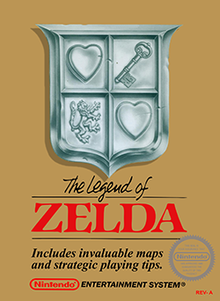
The Legend of Zelda NES Box Cover
             Welcome to a new edition of Retro Corner Reviews and it’s that time of the year again for E3. As you heard Nintendo won't reveal their next console code name NX at the event and will focus on their games for Wii U instead. On their lineup is the newest Zelda game as it will have playable booths at E3 this year. To honor the coverage, we will review the first title in the series that spawned a legacy. The first entry might look outdated today but ever since then it has inspired many to either copy or take inspiration. The NES game at the time presented a big world to explore that wasn't on this scale previously. The graphics weren't the best on the NES compared to later games like Super Mario Bros 3—the gameplay would set many standards in both the RPG and Adventure genres with its puzzles and exploration. The theme of the game follows Link, a warrior that goes on a quest in Hyrule to collect eight pieces of the Triforce of Courage. Link's quest will take him across Hyrule as he battles Ganon and his army (who seized the kingdom) while trying to save Princess Zelda. It’s the typical saving the kingdom and damsel theme Nintendo and the third parties usually gravitated to during the 80s. Will age tarnish a timeless classic because of the dated concepts?

​


Gameplay  
                  The first Zelda is considered one of the best adventure games on the NES thanks to its unique gameplay features. In a traditional 2D overhead style you will encounter many of the lore monsters and tropes that defined the series. Similar to first Super Mario Bros, the cast is quite diverse for such an early entry. The places these monsters are found made it unique and played up those usual tropes in fiction. Those living enemies of Lynels, Octorocks and Moblins are naturally found on the overworld. Then there are the undead like Gibdos, Ghinis and Staflos in the dungeons and those that dwelled in dark environments. Nothing groundbreaking about these concepts as these were done in Dungeons & Dragons and Ultima for years. Throughout the adventure you will meet NPCs in caves and inside a dungeon’s hidden rooms that give hints. It’s obvious the hint system was archaic and nearly close to Castlevania II regarding vagueness. However, once you play the Fourth Gen adventure games with Zelda: A Link to the Past (being an example) then it shows how dated the system was. I also didn't like the hidden caves and secret areas that were too concealed. The dungeons even had the same problem and I would waste so many bombs just to make sure there was a hidden wall. I have played many mods using the same NES style from Zelda Classic that fixed this problem. Nothing was stopping EAD (the studio that developed the game) from adding cracks on the wall or a slightly discolored tile to move something. However, at least the gameplay rewards us for finding these hidden spots—the player's reward would either include a specialized weapon or item that would increase their stats.
Picture
Picture
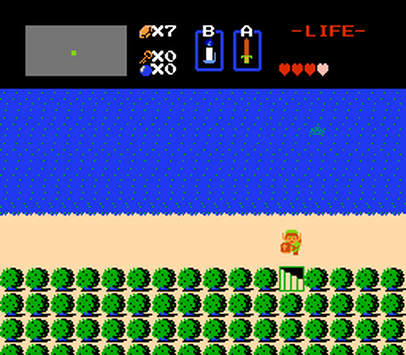
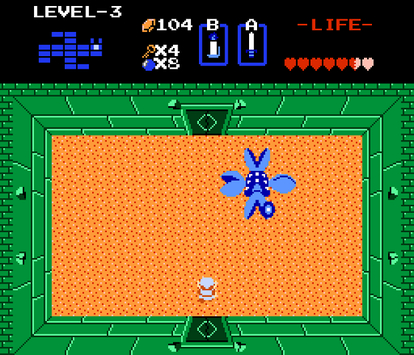
In the first pic has Link use the candle to burn a bush that hides a full heart piece. That was the thing about the genre on the NES as everything was hidden cryptically. There were no signs of differences between a hidden path and a prop or wall being passable. The 16-bit successors of these 8-bit adventure games would correct this going into the 90s when such dated concepts are dropped. The next image is the boss battle with a Manhandle in the third dungeon. Here is a neat trick and if timed right by using bombs you can get the boss in one shot. I don’t know what it is about this plant creature, but the thing is the most interesting guardian monster. Most of the guardian beasts usually fit the typical tropes found in fantasy themes—The idea that a four headed plant was conceived stood out to me since normally we never see this type used previously. Unfortunately, for the Manhandle, it would return years later in Zelda Classic quests and Hyrule Warriors on WiiU and Nintendo Switch.
                 There are some flaws that haven’t aged well and at times made it very difficult. A first entry never truly nails its weapon concepts as there is a limited selection for the secondary tools. For the items, some of them have more use then you would think just take the Meat as an example. One thing I noticed about the Meat is it can actually distract enemies who surround the thing. That’s one element I never realized the item could do and didn’t find out until watching a let’s play with a Zelda Classic quest. Another thing that needed attention was the map system found in the top left of the screen. It would stay blank throughout the game with just a dot representing Link. I mean, what was the point of adding an atlas when it doesn't even show where everything on the map is. That made navigating through Hyrule very tedious so why produce a map system for the dungeons, but not on the overworld? That now brings me to the flute that is used to either weaken a Digdogger or teleport across the land. It being used to cause damage to a boss makes sense as that’s the only time the instrument is ever useful. That brings me to the way the player can only maneuver on a four way grid—It truly does make the controls stiff especially stabbing forward with the sword in four directions. The problem with this is the NES D-Pad is more then capable of inputting a number beyond a four directional grid. If EAD couldn’t think of that then slashing at an arch with the sword would have made things much easier. Even Willow had this mechanic which in turn gave the player a wider range to take out enemies. Stabbing forward is slow and has a limited range when striking a fast moving enemy like a blue dark nut. 
Picture
Picture
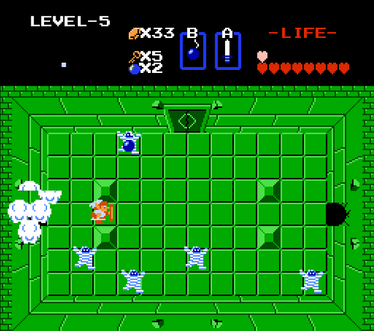
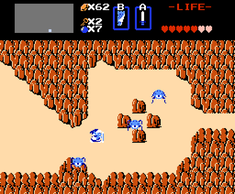
The thing about the Original’s level design was the fact it forced players to figure out a room's puzzle. In fact, this gave them multiple options to progress — in certain levels — even when the regular path was right in front of them. In the left pic shows Link bombing a wall that leads to the special item in the fifth dungeon. By that point the player possibly figured out that the walls (like the one in the image) was bombable. It's a good thing many developers would move away from this level design as today most casuals and dedicated gamers would get frustrated. The right image has Link use the Flute to teleport back to the fourth stage. That was always the problem with the flute as it awkwardly teleports Link to the levels he already visited randomly. We all know EAD fixes this in ALTTP with the ocarina but regardless, the mechanic in the original game is still cumbersome to use.
PictureThe picture shows Link using the clock dropped by one of Tektites as it freezes all enemies on the screen while making the player invincible. It’s basically the Starman of Zelda and did many wonders in the later dungeons as well as the second quest.
              The other secondary weapons like the Magic Boomerang, Bow and the Magic Rod are still Link's best attacks. Thanks to four-way grid controls this made relying on these to defeat the enemies, and they were decent long-range attacks. The thing I noticed about some of these tools is the fact they were never featured again and if so through a reimagining. You can see this with the Meat, Magic Rod and clocks as only one of these ever makes a return. In ALTTP a concept of rods as seen in the Canes of Byrna and Somaria are present however their concepts in magic were very different. Then there’s Link’s Awakening (both the GB/GBC originals) which is the only time the Magic Rod ever comes back. Of course, that brings us to the clocks as they are used to stop enemies while giving the player a starman invulnerability. The only time this was truly useful was in the second adventure due to the difficulty being higher. It’s understandable why EAD abandoned this concept as that would make the later games unbalanced—The idea is there for a harder mode but with casualized gameplay in later installments made the choice too obvious. The old style concept eventually would continue being used in ZC since there is room for the original idea to continue being used by the community.

Rating: 7.8/10

​


Graphics/Presentation
                   When the NES Zelda titles are brought up the visuals are often not remembered for why the Original is a classic. EAD still was using the visuals assets from the Black Box games and it’s the reason the first Zelda looks like it’s from 1985. There are no environments with floor textures on the world map but a blank color choice. The overworld would have a variety of environments like forests and mountains; however, the Lost Woods did differentiate from the other woodland areas. Another thing about the terrain is each has enough differences to tell me this was a new area—It's because I was able to notice a new area that I haven't explored yet. If anyone is expecting detailed environments, then it’s not here as dark blue or green colors are what you will find half the time. My issue is the dungeons had almost a similar design as the first level with the same square room after the other. Even the coloring was the same every two to three times as a little variation would have helped. Another thing about the dungeons' design was it appeared bland and uninspiring as well. I also didn't like the levels having such a small design on the overworld; I mean these are mazes. That’s the thing about these early NES games is they never age well as only Super Mario Bros was the only one to hold up. The Original Zelda obviously had a solid art style pre-A Link to the Past with a rather interesting lore. However, the 8-Bit hardware is what holds the concept back especially when it wasn’t the only one. We could look at Final Fantasy and Metroid as prime examples of having a great idea of not working the way they are supposed to—That is considering the 16-bit successors accomplished what their 8-bit predecessors couldn’t.
Picture
Picture
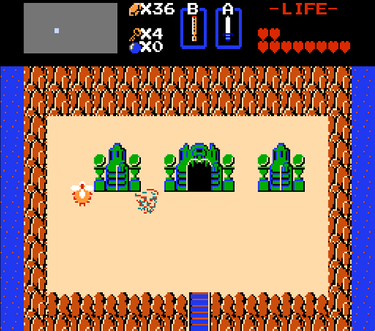
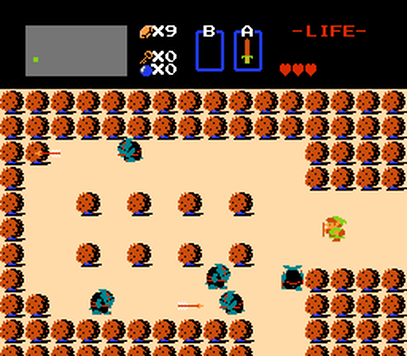
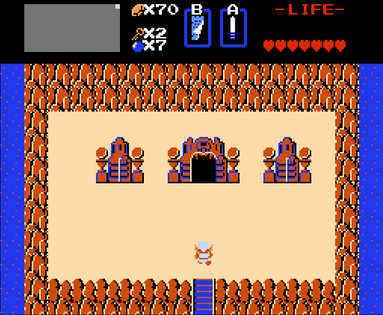
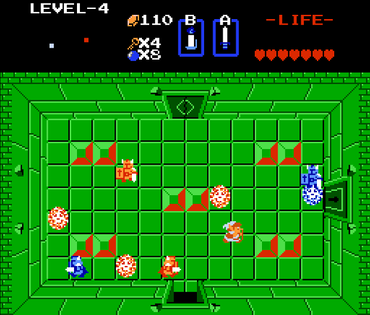
When compared to previous generations prior to 8-bit hardware, it was usually hard to make out what most things were. That is especially true within this genre as most areas were usually a block room design with a single color. The 8-bit hardware akin to the NES allowed the genre to expand its design for once and show more than single color representation. The first image shows Link in the Lost Woods as brown is used for the trees. It’s obvious this was to tell the difference in locations as the Lost Woods isn’t the only forest on the overworld. Even though this concept here is a far cry from ALTTP’s version, the visuals were enough to tell the difference where the player was. It’s the same thing in the second image showing the entrance to the fourth dungeon. As you can tell, the first Zelda has uninspiring designs and even though there are statues, that still isn’t enough to describe the history of these places. It wasn’t until the later 3D titles where the series would finally get fantastic looking environments.
                  The character animations also could have added more variation other than Link and the enemies pacing back and forth. Their attacks had limited movements like Link extending his arm out to use the sword to stab and move in four directions. These are minor flaws in the animation, but I will still give this a pass considering the 8-bit hardware. In ZC, the programmers were able to do this for things like water and the environmental effects using 8-bit assets. Are there quests in the program that have enhanced visuals not found in the Original? Yes, there are but some modders were able to add things in like animation on water and more effects on enemies using those same NES assets. Now, why do I always bring up ZC? It’s because that engine with its programmers shows us how far EAD could have gone even on 8-bit hardware. You want more proof look no further to games like Willow and Crystalis which took the concept even beyond Zelda II. One of the best things that were using the strengths of the NES was the sound and the music. The music is the best theme Nintendo has produced so far out of all their games at the time. It's all upbeat on the overworld but when the player enters the dungeons, the music starts to get darker. The music does get a little repetitive after hearing these tunes for so long when exploring the later stages.

Rating: 7.0/10


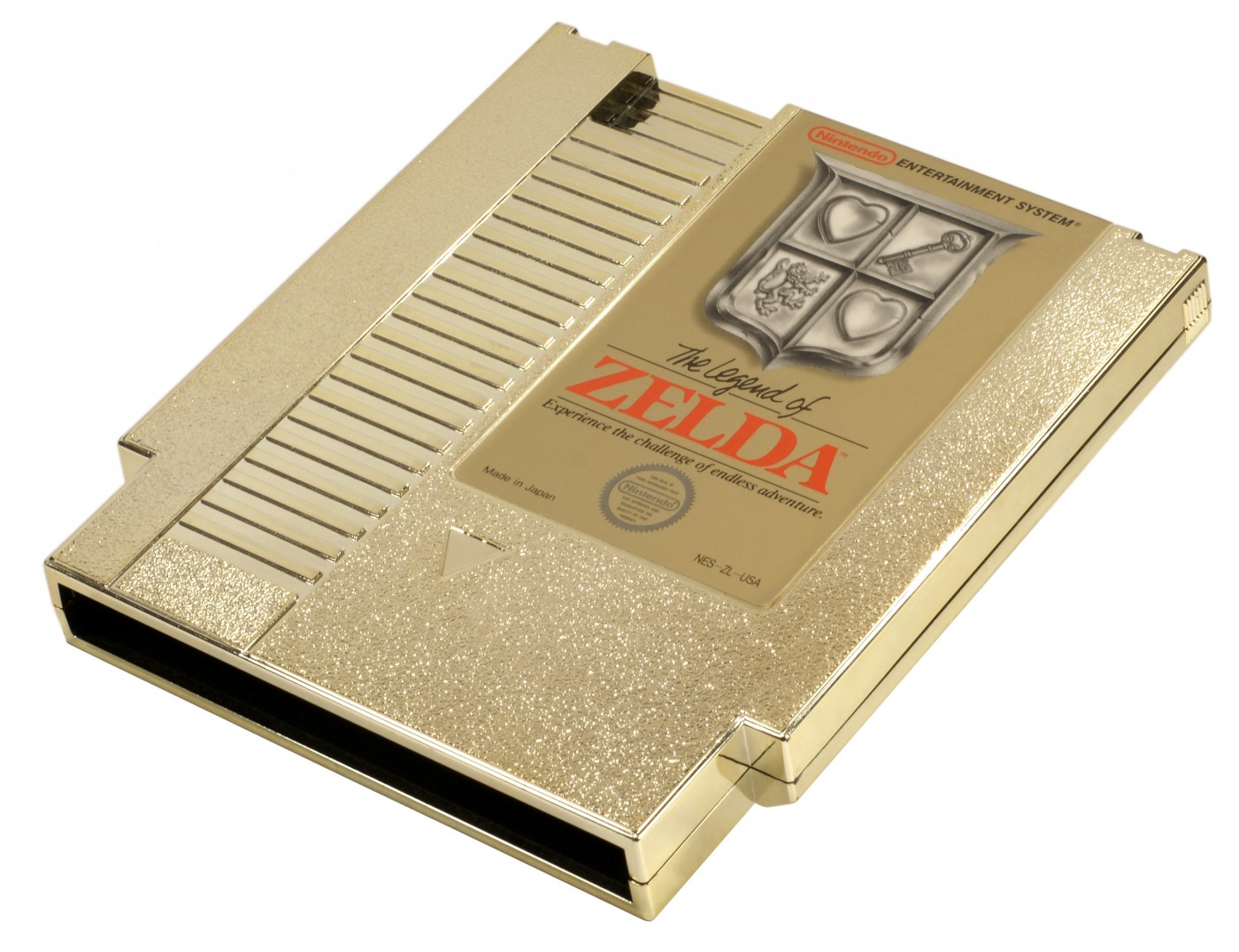
The Zelda 1 Gold cartridgeProbably among the best feature about the classic Zelda games on a cartridge is that familiar gold color.

 
Features/Content

                  For an NES game, it has a good amount of content to make the replay value worth something. Probably one of the unique features is the gold cartridge design and I always felt it definitely stood out among others. However, the color of the cart pales in comparison to the real stuff that gives the first entry replay value. Before there was a Hero mode, the second adventure is where everything would get rearranged. That was always what made the harder difficulty very enjoyable since it added many new challenges from the original adventure. The player can unlock the second quest without beating the game first, and all they have to do is name a file Zelda. In fact, not only did this eventually encourage Nintendo to bring this back — in a lesser form — in the official 3D titles, but even modders in Zelda Classic would make more. Unofficially, there are third, fourth, fifth and sixth quests available on Zelda Classic. Each one follows the same difficulty in rearranging the overworld as the second mode. That just shows the importance of having a harder difficulty as the market is there for these challenges. The second adventure does have its quirks in the later dungeons like the seventh level. If the wrong path is taken will make you go in circles or start the player right back at the beginning. Of course, we can’t forget the red and blue orbs disabling and enabling sword use or walking through walls with no indication of a path. There is one thing that the player could complete, and it's finding the full heart containers in both quests. Now, this is one of the better NES games to have a modern save feature compared to Final Fantasy and Dragon Quest—Most releases either had you record your progress at a specific location or relied on the dreaded 16-letter password. Zelda offers a more flexible save system which was rare for 8-bit titles to have in the 80s. The player had to press Select and Up on the item menu, and they could save anywhere. 

Rating: 8.7/10

​


Picture
Picture
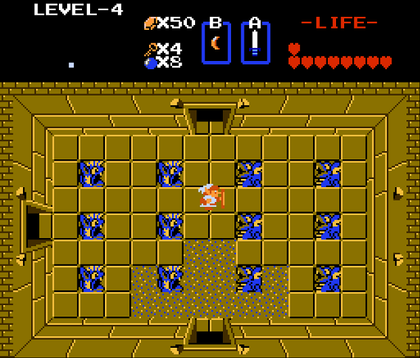
The Original Zelda is chalk filled with cryptic secrets as I showed an example above but this one takes the cake. The only way you would ever find that out was either by accident or in a Nintendo Power magazine. However, the problem with this hidden area is the way it's placed—Unless a person played the Second Quest multiple times, none would figure that out. That leads to another problem and in the second quest walking through walls was the next thing to do when faced with a dead end. B-16 (the screen below A-16) has no indication of something possibly being there. Now, the second screen shows the challenge of the second adventure with those red and blue orbs. Unlike the white orbs, the red strips the player of using the sword and the blue one counteracts the penalty. It really did amp up the challenge further especially when there was a room full of the red ones while the blue orbs were in another area.

​


Final Rating
                  The Original Zelda has aged considerably where its dated concepts no longer hold up. The quality gameplay that once was the standard on the NES shows time was not kind to it. Despite the innovation for adventure and RPG genres for its time, the level design is often hindered by the lack of modern mechanics. The visuals weren’t as good as games such as Metroid or Mega Man however, the sprite designs and environments haven't aged well. Often, the overworld and the dungeons had no original themes at their location nor did any have unique elements. Those small statues and weird exterior structures are all that was given attention to. It isn’t until ALTTP is where we would finally get that attention of detail within the environment. Now, the sound effects and OST is vintage NES style that truly defines 8-bit chiptunes we loved. However, the music was a little repetitive if listened for too long, especially in the second adventure—The heartbeats alone when your health gets low always drove me nuts and it’s this installment that has the worst sounding. If anyone is expecting a sprawling story with unique characters and areas, then most will feel disappointed. The concept for Zelda’s pre-A Link to the Past lore is already there thanks to the colorful designs in the instruction booklet. It's true that 8-bit tech is what held the concept back since the comics produced by a now defunct Valiant Comics did the theme justice. The only way you will experience this lore expanded on is either through Valiant’s take or through ZC with multiple fan remakes of the first game. Other than Metroid, Super Mario Bros and Kid Icarus, there are not that many games that offer these features for its time.

Gameplay: 7.8/10
Graphics/Presentation: 7.0/10
Features/Content: 8.7/10
 

Final Rating: 8.0/10 Very Good

​Sources

​NES Cartridge Image: Hiddentriforce.com. (September 15, 2015). Devon Aelick. Retrospective: Zelda's Personal Impact. http://hiddentriforce.com/retrospective-zeldas-personal-impact/
0 Comments


Leave a Reply.

    Picture
    Retro Gamer has over 25 years of gaming experience and played many classics since the Golden Age. She has been an avid fan since the day the NES graced her life and changed it forever.

      PLEASE SUBSCRIBE FOR THE LATEST ARTICLES

    Subscribe to Newsletter
    Picture
    Picture
    Picture
    Picture
    Picture

    Categories

    All

    RSS Feed

    The social media icon images and Vector Designs are designed by nightcharge from Vecteezy, Instagram on Logo.com, Medium and Onextrapixel.

    fOR mORE Please cLICK Below 

    Picture
    Picture
    Picture
    Picture
    Picture
    Picture
    Picture
    Picture
    Picture
    Picture
Powered by Create your own unique website with customizable templates.
  • Home
  • Retro Corner
    • Retro's Blog >
      • Could Square Enix be Making a Come Back?
      • Top Best/Worst >
        • Retro's Top Five Best Five Nights at Freddy's Knockoffs
        • Retro's Top Five Worst Five Nights At Freddy's Knockoffs
        • Retro's Top Ten Classic Games to Play During Halloween
      • Is Johnny Turbo the Worst Superhero Ever?
      • Nintendo 64: My Most Loathsome Console Experience
      • Sega Genesis: The Ultimate Arcade Console
      • TurboGrafx 16: A Lost and Forgotten Console
    • Retro Arena >
      • Disney's Aladdin: Super NES vs Genesis
      • Doom (PS1) vs Doom 64
      • Doom: Super NES vs Genesis 32X
      • Final Fight (Super NES) vs Streets of Rage
      • Jurassic Park: Super NES vs Sega Genesis
      • Killer Instinct vs Mortal Kombat II
      • Lufia vs Breath of Fire
      • Neutopia II (TurboGrafx) vs Crusader of Centy (Genesis)
      • Super Ghouls N Ghosts vs Super Castlevania IV
      • Willow (NES) vs Neutopia (TurboGrafx)
    • Gaming Entertainment >
      • Captain N: The Game Master Season One
      • Captain N: The Game Master Vol.1
      • Pokemon Season 1 Review
      • Mario TV/Film >
        • Super Mario Bros Supershow
        • Super Mario World
        • The Adventures of Super Mario Bros 3
      • Mortal Kombat: Defenders of the Realm
      • The Legend of Zelda (Cartoon)
      • The Legend of Zelda Vol. 1 (Comic)
    • Horror Gaming >
      • A Figure in Gray
      • Conplus
      • EarthBound: Crpyt of the Ancients
      • Mario >
        • MaRIo/MaRIo II (Creepypasta)
        • MaRIo III
        • Super Mario 64 (Creepypasta)
        • Super Mario 64: Damned
      • Metroid II: Secret Worlds
      • Pale Luna
      • Pokemon >
        • Forgotten Yellow
        • Glitchlett
        • Tarnished Gold
      • Super Metroid (Creepypasta)
      • The Legend of Zelda >
        • Legend of Zelda Bootleg/Hack
        • Zelda II: The Lost Level
        • Zelda 3 Prototype
        • Zelda 64 Beta
      • The Theater
      • The Yellow Devil
    • Port Mania >
      • Ghouls N Ghosts
    • Retro Corner Reviews >
      • NES >
        • Double Dragon
        • Double Dragon II: The Revenge
        • Earthbound: Beginnings
        • Mario >
          • Super Mario Bros
          • Super Mario Bros: The Lost Levels
          • Super Mario Bros 2
          • Super Mario Bros 3
        • Mega Man >
          • Mega Man
          • Mega Man II
          • Mega Man III
          • Mega Man IV
          • Mega Man V
          • Mega Man VI
        • Metroid
        • StarTropics
        • The Legend of Zelda
        • The Legend of Zelda II: The Adventure of Link
        • Willow
      • Super NES >
        • Breath of Fire
        • Captain America and the Avengers
        • Demon's Crest
        • Disney's Aladdin
        • Donkey Kong Country
        • Donkey Kong Country 2
        • Doom
        • Final Fight
        • Jurassic Park
        • Lufia and the Fortress of Doom
        • Marvel Super Heroes in War of the Gems
        • Mega Man VII
        • Super Game Boy
        • Super Ghouls N Ghosts
        • Super Star Wars
        • The Legend of Zelda: A Link to the Past
      • Nintendo 64 >
        • Doom 64
        • Pokemon Stadium
        • Resident Evil 2
        • Star Wars: Shadows of the Empire
        • Super Smash Bros
        • The Legend of Zelda: Ocarina of Time
      • Game Boy/Game Boy Color >
        • Donkey Kong
        • Donkey Kong Land
        • Donkey Kong Land 2
        • Game & Watch Gallery 3
        • Kirby's Dream Land
        • Mario's Picross
        • Metroid II: Return of Samus
        • Pokemon Red/Blue
        • Pokemon Yellow
        • Super Mario Land
        • Super Mario Land 2
      • Sega Genesis >
        • Crusader of Centy
        • Disney's Aladdin
        • Fatal Labyrinth
        • Ghouls N Ghosts
        • Sonic the Hedgehog
        • Sonic the Hedgehog 2
        • Spider-Man/Venom: Maximum Carnage
        • Splatterhouse 2
        • Splatterhouse 3
        • Streets of Rage
        • Sword of Vermilion
      • Sega CD/32X >
        • Doom (32X)
        • Vay (Sega CD)
      • PlayStation One >
        • Doom
        • Resident Evil: Director's Cut
        • Resident Evil 2: Dual Shock Version
        • Resident Evil 3: Nemesis
        • Silent Hill
      • TurboGrafx 16 >
        • Neutopia
        • Neutopia II
        • Splatterhouse
      • Arcade >
        • Ghosts N Goblins
        • Ghouls N Ghosts
        • Killer Instinct
        • Mortal Kombat
        • Mortal Kombat II
        • Night Slashers
        • Star Wars Trilogy
      • PC Gaming >
        • Alone in the Dark
        • Castle Wolfenstein 3D
        • Doom II: Hell on Earth
        • Star Wars: Dark Forces
        • The Elder Scrolls: The Arena
  • Alicorn Enchantment
    • The Equestrian Blog >
      • Is the New Equestria Girls Series a Bust?
      • Why was Generation II Skipped by Hasbro?
      • Were the Dazzlings a Missed Opportunity?
    • Alicorn Reviews >
      • Friendship is Magic >
        • Season 1 >
          • Friendship is Magic Part 1 and 2
        • Season 8 >
          • School Daze Part 1 and 2
          • The Maud Couple
          • Fake It Til You Make It
          • Grannies Gone Wild
          • Surf and/or Turf
      • Equestria Girls Series >
        • Equestria Girls (First Film)
        • Rainbow Rocks
        • Friendship Games
        • Legend of Everfree
        • Dance Magic
        • Movie Magic
        • Mirror Magic
        • Forgotten Friendship
    • Pony Media >
      • D'Lirium (PC)
      • Melowy Vol.1 (Comic)
      • Melowy Vol.2 (Comic)
      • My Little Pony SNES (Grimdark Tale)
      • My Little Pony: The Runaway Rainbow (GBA)
  • Modern Gaming
    • Sacred Realm Tower >
      • Sacred Guides >
        • 3rd Quest
        • Ballad of a Bloodline >
          • Part 1: Preparing for Adventure
        • Hryule's Christmas DX >
          • Part 1: The Misadventure of Myra
          • Part 2: Saving Christmas
      • Sacred Reviews >
        • Fan Hacked Games >
          • EarthBound: Hallow's End
          • The Legend of Zelda: Parallel Worlds Remodel
        • Zelda Classic >
          • Hyrule's Christmas DX
          • Randomizer Classic
          • Second Chance
    • Modern Gaming Reviews >
      • PC Gaming >
        • Fable: The Lost Chapters
        • Them and Us
      • GameCube >
        • Resident Evil
        • Resident Evil 3: Nemesis
      • Game Boy Advance >
        • Doom
        • Doom II
        • Final Fantasy I & ii: Dawn of Souls
        • Star Wars: Flight of the Falcon
        • Star Wars Trilogy (GBA)
        • The Invincible Iron Man
        • The Incredible Hulk
      • Wii U >
        • The Legend of Zelda: Breath of the Wild
      • Nintendo Switch >
        • A Robot Named Fight!
        • Animal Crossing: New Horizons
        • Doom (1993)
        • Duke Nukem 3D: 20th Anniversary
        • Mega Man Legacy Collection Vol 1
        • Resident Evil 3 Cloud Edition
        • The Legend of Zelda: Link's Awakening
  • Contact